
Understanding the M8 Clinch Stud: Applications and Benefits
The M8 clinch stud is a vital component in modern fastening solutions. It is widely used in various industries, including automotive and aerospace. This fastener offers a reliable and efficient way to secure sheet metal components.
Clinch studs are designed to be pressed into pre-punched holes. This creates a strong and permanent attachment without the need for welding. The “M8” designation indicates the stud’s metric size, specifically an 8mm diameter.
These fasteners are available in different materials, such as stainless steel and aluminum. This variety ensures they can withstand diverse environmental conditions. M8 clinch studs are known for their high torque resistance and pull-out strength.
Their use can significantly reduce assembly time and costs. They also improve the aesthetic appearance of products by eliminating visible fasteners.
What Is an M8 Clinch Stud?
An M8 clinch stud is a type of fastener used for securing parts in sheet metal. It offers an efficient way to join components without welding. The “M8” denotes an 8mm diameter metric stud size.
Clinch studs provide a simple yet effective solution for many industries. They are particularly favored in sectors like electronics, where space is limited. Their design allows for a flush finish with minimal protrusion.
Here’s what makes the M8 clinch stud special:
- Press-fit into pre-punched holes
- Provides permanent metal-to-metal connection
- Suitable for both thin and thick sheets
M8 clinch studs are made to meet specific needs. They are crafted from materials like stainless steel and zinc-plated steel. This versatility ensures they perform well under various conditions.

Their ability to maintain strength and integrity is a key advantage. These features make them popular in high-stress applications across industries.
How Does a Clinch Stud Work?
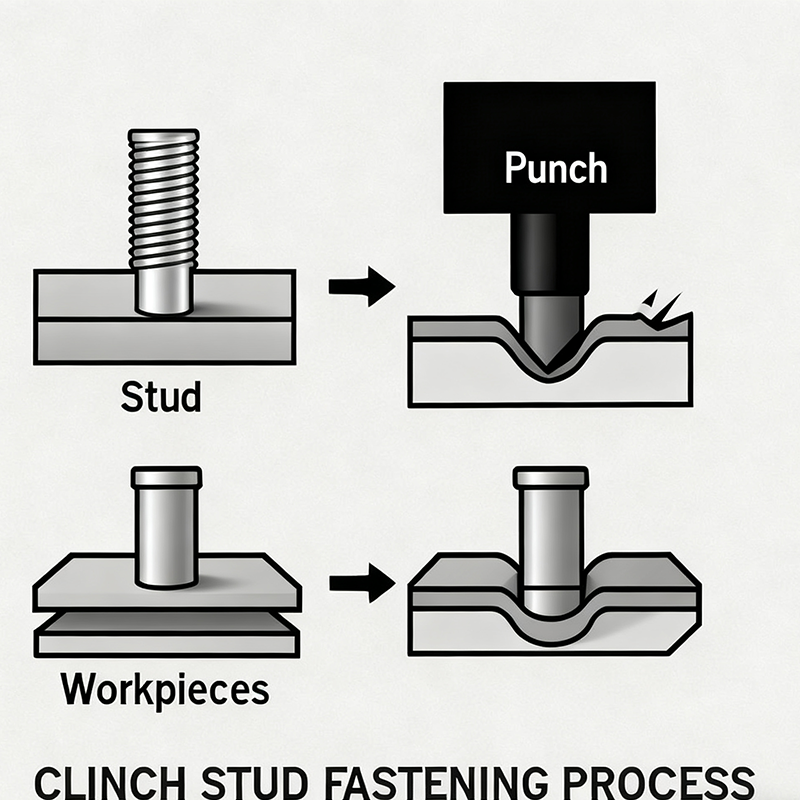
Clinch studs function by embedding into sheet metal to form a strong bond. The process begins with creating a pre-punched hole in the metal. This hole matches the stud’s diameter for a snug fit.
When a clinch stud is pressed into the hole, its knurled design grips tightly. This action creates a firm metal-to-metal connection. The result is a reliable and durable fastener that holds components securely.
Key steps in the clinch stud process include:
- Aligning the stud with the pre-punched hole
- Pressing the stud into place using appropriate tools
- Ensuring a tight and flush finish
The stud’s design ensures high resistance to torque and pull-out forces. This makes clinch studs an excellent choice for applications requiring strong and long-lasting connections.
Key Applications of M8 Clinch Studs
M8 clinch studs are widely used across various sectors due to their versatility. They are particularly favored in industries such as automotive, aerospace, and electronics. Their capacity to provide secure fastening makes them indispensable.
In the automotive field, clinch studs help assemble body panels and other components. They ensure that parts remain firmly connected even under stress. The aerospace industry values them for their robustness and precision.
Electronics manufacturers utilize clinch studs for their compact and effective fastening solution. These studs hold circuit boards and other components with ease. Their installation reduces visible hardware and maintains a sleek appearance.
Common applications include:
- Securing thin to thick sheet metal
- Providing strong hold in high-stress areas
- Enhancing product aesthetics by hiding fasteners
These versatile studs are ideal where space constraints exist, maintaining functionality without sacrificing quality.
Benefits of Using M8 Clinch Studs
M8 clinch studs offer several compelling benefits for various applications. One of their main advantages is the ease of installation. With the right tools, these studs can be installed quickly, reducing assembly time and labor costs.
They provide a strong, reliable fastening solution that withstands high torque and pull-out forces. This strength makes them suitable for applications subject to significant stress and vibration. Their use eliminates the need for welding, preventing potential distortions and maintaining material integrity.
Clinch studs also contribute to product aesthetics by minimizing visible fasteners. This results in a cleaner appearance, which is often crucial in consumer-facing products. Additionally, their small footprint allows them to function effectively in confined spaces.
The overall benefits include:
- Quick installation
- High strength and durability
- Improved aesthetic appeal
These advantages make M8 clinch studs a preferred choice among engineers and manufacturers seeking efficient, reliable fasteners.
Material Options and Customization
M8 clinch studs are available in a variety of materials, allowing customization based on specific needs. The choice of material is crucial and varies depending on the application environment. For instance, stainless steel is ideal for corrosion resistance, while aluminum offers a lightweight option.
Materials must align with the demands of the application to ensure longevity and performance. Selecting the right material can significantly enhance the durability and functionality of the clinch stud. Customization doesn’t stop at materials; you can choose different lengths and thread types to suit unique requirements.
Available customization options include:
- Material choice (e.g., stainless steel, aluminum)
- Length variations
- Thread specifications
Proper customization ensures the clinch stud meets both structural and operational demands efficiently.
Installation Process and Best Practices
Installing an M8 clinch stud requires precision and the right tools. The process begins by creating a pre-punched hole in the sheet metal. This hole must be the correct size to ensure the clinch stud fits securely.
Using a press or clinching tool, the stud is then inserted into the hole. The tool applies force, embedding the stud permanently into the metal. This results in a secure attachment without any need for adhesives or welding.
To achieve the best results, following certain practices is essential. These include:
- Ensuring the hole is clean and debris-free
- Using calibrated tools for consistent pressure
- Regularly inspecting tools for wear
Proper installation is key to maximizing the performance and lifespan of the clinch stud in its application.
M8 Clinch Studs vs. Other Fastening Solutions
The M8 clinch stud offers distinct advantages over other fasteners. Unlike screws or bolts, clinch studs provide a permanent attachment without protruding hardware. This feature is ideal for applications needing sleek, unobtrusive designs.
Compared to welding, clinch studs reduce assembly time and require less skilled labor. They are also gentler on materials, preventing heat-related distortions. Key comparison points include:
- Permanent, yet removable fastener
- No need for additional hardware
- Installation does not require welding
- Minimizes material stress
In many scenarios, the m8 clinch stud provides a quicker, more efficient fastening method with enduring reliability.
Conclusion
The M8 clinch stud stands out as a versatile and efficient fastening solution. Its unique ability to provide permanent, secure attachments without the need for welding or additional hardware makes it an attractive option across various industries.
For applications requiring robust fastening in sheet metal, the m8 clinch stud delivers reliability and ease of installation. This fastener’s environmental friendliness and adaptability to different materials further enhance its appeal. Thus, it remains a top choice for engineers and product designers worldwide.
