
Understanding Clinch Studs and Nuts Applications
Clinch studs and nuts are essential components in the world of industrial fasteners. They provide strong, permanent threads in thin sheet metal. These fasteners are crucial for industries like automotive, aerospace, and electronics.
Their design allows them to be pressed into pre-punched holes. This creates a secure attachment without welding or extra hardware. This makes them ideal for applications where space is limited.
The installation process is straightforward. It involves pressing the fastener into the sheet metal. This causes the material to flow into a groove, locking the fastener in place.
Clinch studs and nuts are available in various materials. Options include stainless steel, aluminum, and zinc-plated steel. This variety ensures they meet different environmental and strength needs.
Understanding their applications and benefits is vital. It helps in selecting the right fastening solutions for your projects. This guide will explore their uses, benefits, and selection criteria.
What Are Clinch Studs and Nuts?
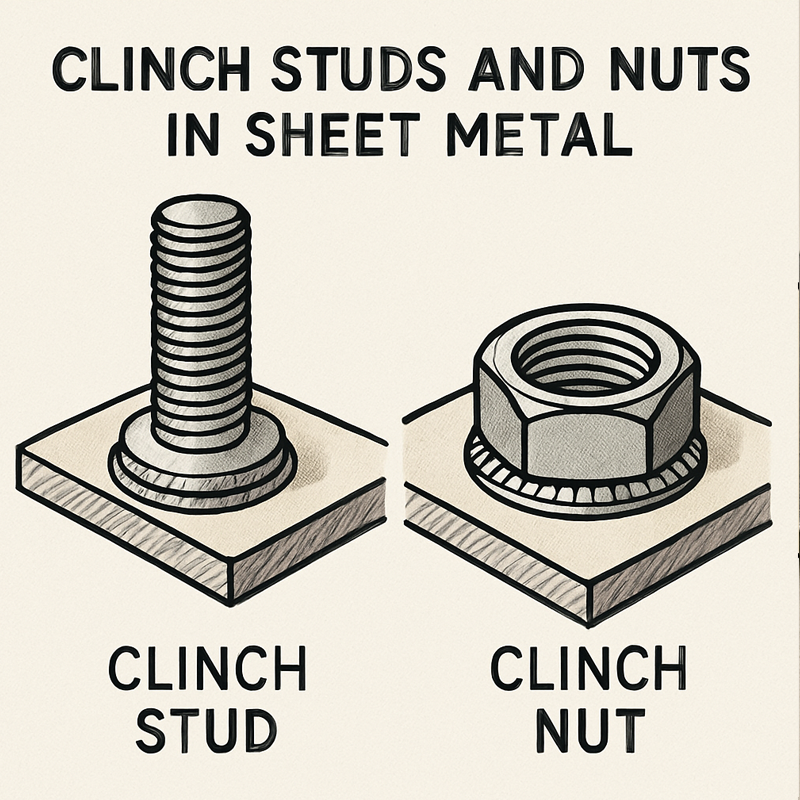
Clinch studs and nuts belong to the category of self-clinching fasteners. They are designed to create sturdy, permanent threads in sheet metal. Unlike traditional fasteners, they do not require additional hardware for installation.
These fasteners are pressed into pre-punched holes in the metal. The pressure deforms the metal into a groove on the fastener, securing it in place. This method provides a strong and reliable hold in applications where welding is impractical.
Clinch studs and nuts are versatile components. They come in various sizes and configurations to meet diverse needs. Their versatility makes them suitable for different design and structural requirements.
Some key features of clinch studs and nuts include:
- High torque-out and push-out resistance
- Flush fitting for space-saving applications
- Ability to be installed in both manual and automated assembly processes
Industries utilizing these fasteners benefit from reduced assembly times and costs. They are vital for ensuring lasting structural integrity.
How Clinch Studs and Nuts Work
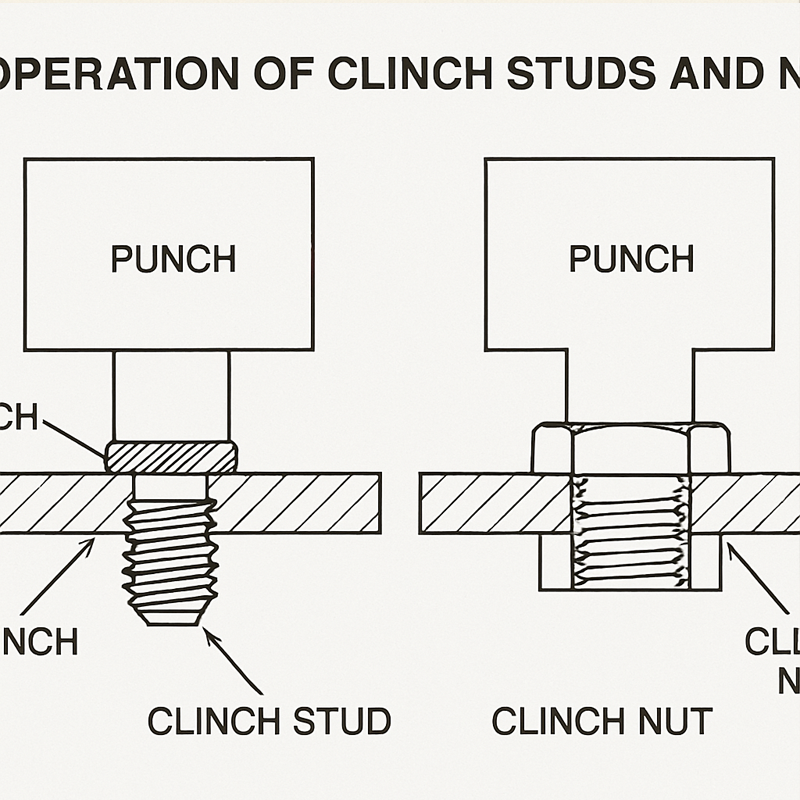
Clinch studs and nuts are designed for simplicity and durability. They embed themselves into sheet metal through a straightforward process. This process involves pressing the fastener into a pre-punched hole in the metal sheet.
As the clinch fastener is pressed, the metal surrounding the hole flows into an undercut. This undercut is part of the fastener’s design, which holds it securely in place. This technique ensures a robust attachment without additional tools or adhesives.
One of the advantages is the flush finish they provide. This is achieved as the fastener becomes an integral part of the metal surface. The result is a streamlined and efficient solution for fastening needs.
Key aspects of their operation include:
- Press-fit installation
- Integration into pre-punched holes
- Formation of a permanent joint
Key Benefits of Clinch Studs and Nuts in Industrial Fastening
Clinch studs and nuts offer numerous advantages over traditional fasteners. They provide a high strength-to-weight ratio. This makes them ideal for applications where weight is a concern.
Another key benefit is their resistance to torque and push-out. These fasteners maintain a firm grip, even under stress. This ensures long-term reliability in demanding environments.
Their installation process is simple and efficient. This saves both time and money by eliminating complex secondary operations. As a result, assemblies can be completed faster, reducing labor costs.
In addition, they offer a neat finish which enhances both form and function. They are flush with the surface, ensuring a clean, professional look. This is particularly important in applications requiring an aesthetic appearance.
Key benefits include:
- High strength-to-weight ratio
- Torque and push-out resistance
- Time and cost savings
Common Applications Across Industries
Clinch studs and nuts are versatile components. They serve diverse industries with unique demands. Automotive and aerospace sectors rely on these fasteners for reliable assembly connections.
In electronics, these fasteners secure delicate components. They ensure connections without compromising performance. The compact design suits tight spaces within electronic devices.
In telecommunications, robust and secure connections are crucial. Clinch studs and nuts hold components firmly in place. They help maintain signal integrity over time.
These fasteners also appear in industrial equipment. Durability and strength make them suitable for heavy-duty use. The fasteners help maintain machinery efficiency and longevity.
Common applications include:
- Automotive assemblies
- Aerospace components
- Electronic devices
- Telecommunications equipment
- Industrial machinery
Their adaptability makes them invaluable across multiple fields. They provide effective solutions for complex assembly challenges. Selecting the right fastener enhances product performance and durability.
Material Options and Selection Criteria
Choosing the right material for clinch studs and nuts is crucial. Various materials offer different benefits, catering to specific needs. Options include stainless steel, aluminum, and zinc-plated steel.
Stainless steel is ideal for corrosion resistance. It suits environments prone to moisture and rust. Aluminum provides a lightweight yet strong solution, perfect for reducing weight.
Zinc-plated steel offers cost-effective corrosion resistance. However, it may not match stainless steel’s durability. Consider environmental conditions and load requirements when selecting a material.
Essential selection criteria include:
- Corrosion resistance
- Weight constraints
- Budget considerations
Selecting the proper material impacts the fastener’s longevity. It also ensures compatibility with other assembly components. Thoughtful choices enhance overall system reliability.
Installation Process and Best Practices
Proper installation of clinch studs and nuts is essential for reliable performance. The process is straightforward but needs attention. Press the fastener into a pre-punched hole until flush with the surface.
Ensure the press’s pressure is sufficient to lock the fastener in place. This creates a secure bond between the fastener and sheet metal. Avoid using excessive force, as it may distort the panel.
Follow these best practices for optimal results:
- Use a matching press tool for uniform installation
- Maintain clean surfaces to prevent contamination
- Inspect for proper alignment during installation
Regularly inspect the installed fasteners. This can prevent potential failures and extend the assembly’s lifespan. Following best practices leads to more durable assemblies.
Comparing Clinch Studs and Nuts to Other Fastening Solutions
Clinch studs and nuts offer unique advantages over traditional fastening methods like welding and riveting. While welding provides strong joints, it requires skilled labor and special equipment. Riveting, although simpler, might not offer the flush finish clinch fasteners do.
Here’s how clinch studs and nuts compare to other solutions:
- Cost-Effective: Reduces labor costs compared to welding.
- Flush Finish: Unlike rivets, they sit flush with the surface.
- Ease of Installation: Does not require specialized skills or tools.
Their versatility and ease of installation make them a popular choice in many industries. In many cases, they are the preferred choice for projects needing clean aesthetics and reliable performance.
Maintenance and Inspection Tips
Proper care of clinch studs and nuts extends their lifespan. Regular checks prevent failures, ensuring system integrity. Addressing issues early can avoid costly repairs and downtime.
Here are some maintenance tips:
- Inspect Regularly: Look for wear or corrosion.
- Tighten as Needed: Ensure snug fit in panels.
- Clean Appropriately: Remove debris that could affect performance.
Routine maintenance ensures these fasteners keep systems running smoothly. Early attention to minor issues enhances durability and reliability.
Conclusion: Choosing the Right Fastening Solution
Clinch studs and nuts provide a robust choice for fastening in diverse industries. They offer durability and efficiency, supporting structural integrity.
Selecting the right fastener involves understanding your specific needs. Assess your application and environment to make the best decision. With careful selection, clinch studs and nuts can enhance your manufacturing processes.
