
Understanding Clinch Stud Hole Size Specifications
Clinch studs are essential fasteners in many industries. They provide a reliable way to attach components to sheet metal.
Understanding clinch stud hole size is crucial for successful installation. The right hole size ensures a strong, durable joint.
Using the wrong size can lead to weak connections and potential failures. This can result in costly repairs and safety hazards.
Hole size charts are valuable tools for selecting the correct size. They simplify the process for engineers and technicians.
This guide will explore clinch stud hole size specifications. It will help you make informed decisions for your projects.
What Is a Clinch Stud?
Clinch studs are specialized fasteners used primarily with sheet metal. They provide a permanent threaded attachment point within a thin metal panel.
These studs are popular in various industries, including automotive, aerospace, and electronics. Their design ensures a secure hold and a clean, flush finish.
Key characteristics of clinch studs include:
- Ease of installation
- Strong mechanical hold
- Versatility with different materials

With multiple applications and easy installation, clinch studs are indispensable in precision engineering. Their adaptability makes them suitable for many types of projects.
Why Clinch Stud Hole Size Matters
The correct hole size is critical for clinch stud installation. Using the wrong size can compromise the strength of the joint.
A hole that is too small may prevent proper seating, while a hole that is too large can lead to a loose fit. Both scenarios can cause failure.
Clinch stud performance depends significantly on achieving the exact hole size. A precise fit ensures durability and reliability over time.
Here are key points about the importance of hole size:
- Prevents joint failure
- Ensures a secure fit
- Maintains strength and alignment
Overall, accurate hole sizing is essential for a successful and long-lasting installation, preserving the integrity of the construction.
Factors Affecting Clinch Stud Hole Size
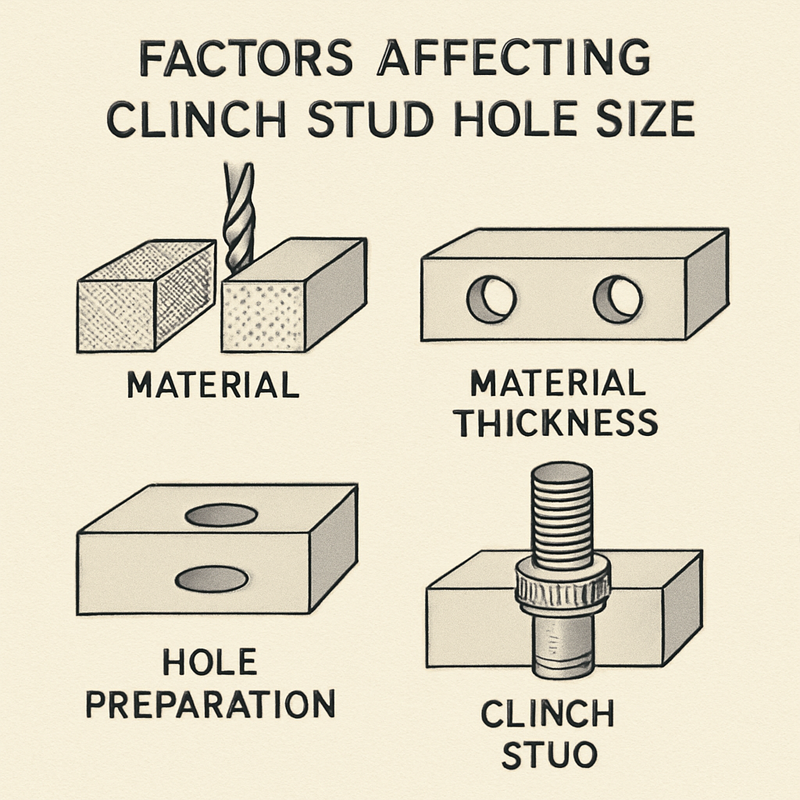
Several factors influence the correct hole size for clinch studs. Each element plays a crucial role in determining the appropriate fit.
Material thickness is one of the most important factors. Thicker materials may require larger holes for proper stud installation.
The type of material also affects hole size. Metals like steel may need different sizing compared to softer metals like aluminum.
Additional considerations include:
- Clinch stud design features
- Manufacturer specifications
- Environmental conditions
Manufacturers often provide guidelines specific to their products. It is vital to consult these to ensure compliance with recommended sizes.
Environmental factors, such as temperature and humidity, can also impact hole sizing. These conditions may affect material expansion and contraction.
How to Determine the Correct Hole Size
Determining the correct hole size for a clinch stud involves several steps. It starts with understanding the specifications of the stud itself.
First, refer to the manufacturer’s documentation. These documents provide detailed guidelines on recommended hole sizes for each stud type.
Next, consider the thickness of the sheet metal. Matching the hole size to the metal thickness ensures a snug and secure fit.
Another step is to evaluate the material properties. Different metals have unique requirements, impacting the hole size.
Key steps include:
- Consult manufacturer specs
- Measure sheet metal thickness
- Assess material properties
Precision tools and measurements are essential in this process. Tools like calipers provide accurate dimensions, reducing errors in size selection.
Finally, cross-check your selected size with a hole size chart. This ensures compatibility and reduces the risk of improper installation.
Using a Hole Size Chart for Clinch Studs
Hole size charts simplify clinch stud installations. They provide an easy reference for matching stud diameters to the appropriate hole sizes.
These charts are especially useful when dealing with various materials and thicknesses. They save time by reducing guesswork.
Understanding how to read a hole size chart is crucial. It ensures that the chosen dimensions align perfectly with the specifications.
Important aspects of a hole size chart:
- Lists stud types and sizes
- Provides recommended hole sizes
- Considers material types and thicknesses
Consulting a chart ensures optimal hole size selection. It promotes efficient installation and enhances joint strength. This step often turns a complex task into a straightforward process.
Common Mistakes and How to Avoid Them
Selecting the wrong hole size is a frequent mistake during clinch stud installation. This error can result in weak or failed joints.
Misalignment during installation also leads to problems. It can affect the integrity of the fastened connection.
To prevent these mistakes, adhere to the following guidelines:
- Always consult a hole size chart
- Verify material compatibility and thickness
- Ensure correct alignment during installation
By following these steps, you enhance the durability and reliability of clinch stud applications. Proper planning and checks significantly reduce the risk of installation errors, ensuring successful outcomes.
Industry Standards and Manufacturer Guidelines
Industry standards play a crucial role in specifying clinch stud hole sizes. Organizations like ISO and ANSI provide guidelines that help ensure consistency and reliability.
Manufacturers also offer specific recommendations for their products. Adhering to these can enhance compatibility and performance. Consider the following when reviewing guidelines:
- Consult ISO or ANSI standards
- Follow manufacturer instructions carefully
- Check for any updates in guidelines
By observing these standards and guidelines, you maintain high-quality installations and reduce potential issues. This approach supports both safety and efficiency in engineering applications.
Tips for Accurate Installation
Accurate installation of clinch studs ensures a lasting and secure joint. Understanding the process and incorporating specific techniques can enhance success.
Consider these installation tips to improve results:
- Align the stud perfectly before insertion
- Use the proper tools for press-fit operations
- Monitor torque application for precision
Applying these tips helps prevent misalignment and joint failure. By focusing on precision, you can achieve optimal performance from your clinch studs.
Conclusion
Understanding clinch stud hole size specifications is crucial for secure fastening. Correct hole sizing ensures strong, reliable connections and minimizes the risk of failures.
By following guidelines and utilizing tools like hole size charts, you can choose the right specifications every time. This knowledge not only improves the integrity of your projects but also enhances efficiency and safety in various applications.
